
31 January 2022 · 2022-01 newsletter
This month we also remember the 80th Anniversary of one of the important milestones in our Schoenstatt history – 20th January 1942.
This event is referred to as Schoenstatt’s Second Milestone and such is its importance that Father Kentenich often spoke of it as “the axis of Schoenstatt’s history”. Why is it so important?
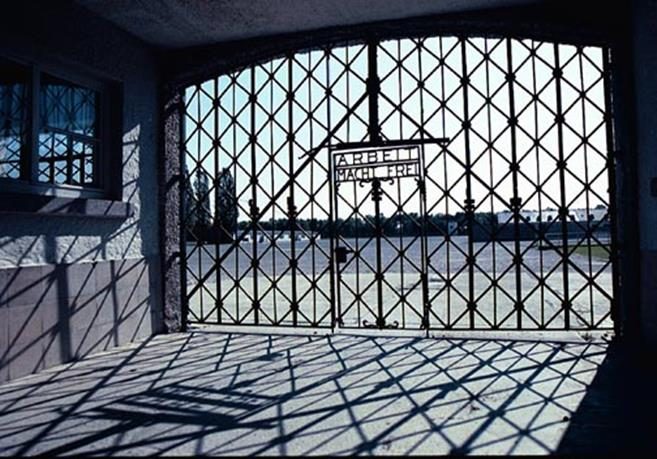
On 20th January 1942, Father Kentenich, a prisoner of the Nazis in the Gestapo prison in Koblenz, Germany, freely chose on this day not to use an opportunity he had been given to have a medical examination which may have allowed him to be excluded from going to a concentration camp.
After much soul-searching, Fr. Kentenich had concluded that God’s will for him and Schoenstatt was to turn down the offer and freely embrace the concentration camp. In this concrete moment of the family’s history, he saw the urgent need to challenge his followers to trust even more radically in God’s power over human power.
He therefore combined his decision with the declaration of his belief that his freedom would depend on the family committing to the Blank Cheque (total conformity to God’s will) and the Inscriptio (love of the cross). This expressed the “interwovenness of fates”– which was that his well-being would be determined by his family.
He was convinced that in God’s eyes he and his followers were a family. In this faith, he relied on the reality of the supernatural world, the reality of the covenant they had made and the union of destiny among the members themselves. His concern was not about a particularly heroic act. His intention was to open our eyes to the deep dimensions of our connectedness as a spiritual Family created with him and around him. Without being aware of this background, we will not truly understand our father.
Thus the 20th January marked a new stage of growth for Schoenstatt’s experience as a family and this connectedness can also been seen in the events that followed – such as Schoenstatt’s third milestone (31st May, 1949) and father’s exile in Milwaukee for 14 years.
During a four-week Tertianship in Brazil in 1952 Father Kentenich said in referring to the 20th January 1942:
“Seen in a supernatural light, we are a real family: I and my followers — my followers and I . If we are a real family in God’s plans, then our destiny is interwoven, our destiny is interconnected in the supernatural sense. Practically speaking, the sacrifices my followers make on my behalf are really for my person; I count on this reality, and it has proven effective. By the same token, the sacrifices I offer on behalf of the Family are a means to save the Family. This offers a much greater security than if I had the whole Gestapo on my side.
Seen within the framework of the whole Founding Document and the covenant of love, it had to be taken for granted that the condition [for my freedom] was the Inscriptio made by the whole family.
My Inscriptio protected Schoenstatt, and the Inscriptio of the Family gave me back my freedom. This is a classic example of spiritual interconnectedness, of mutual interwovenness. Here you see the new person in the new community, not only talked about but exemplified and lived.”
(“In Union with the Father” – JK Brazil, 1952)
From the 20th January 1942 came the awareness for the Schoenstatt Family that father’s mission was also our mission. It was an expression of deep loyalty to our founder, and to our Blessed Mother and loyalty to our Covenant of Love. For Fr. Kentenich, the 20th January 1942 was a deepening of his Covenant of Love with our MTA, the deepening of the first milestone of 18th October 1914.
Now on this 80th Anniversary of the 20th January, 1942, we might reflect upon the momentous decision that Father Kentenich made on this day and the reasons for his decision.
We can ask ourselves:
- What does the Covenant of Love mean in my life?
- What responsibility do I now take to ensure that I get to know our father and founder better?
- What sense of responsibility do I have for the mission that Father Kentenich has left us in Schoenstatt?
- Do I have a sense of responsibility in particular for our Australian Schoenstatt mission that unites us as a national Family: “One Heart in the Father for the Family of God”?
Filed underNewsletter · Reflections